Individual tiles tell stories in miniature. But for centuries, tile-makers in Portugal and the Netherlands pursued a grander ambition: painting across many tiles to create a single, sweeping scene.
These multi-tile panels, called azulejos in Portugal and tegeltableaux in the Netherlands, transformed walls into narratives, turning churches, palaces, and ordinary homes into galleries of painted ceramic.
This is the story of two parallel traditions that inspire Not Quite Past's tile panels.
The Portuguese Azulejo
The word azulejo derives from the Arabic az-zulayj, meaning polished stone. When the Moors ruled much of the Iberian Peninsula, they brought with them a rich tradition of geometric tile-work, which decorated mosques, palaces, and gardens across Al-Andalus.
After the Christian reconquest, Spanish and Portuguese craftsmen inherited this tradition, adapting it to new purposes. By the fifteenth century, Portuguese artisans were importing Sevillan tiles and beginning to develop their own workshops. The tin-glazed earthenware technique, allowing vivid colours on a bright white ground, was perfectly suited to the Portuguese climate, where tiles protected walls from heat and damp alike.
What began as geometric patterns soon became something more ambitious. Inspired by Flemish painting and Italian majolica, Portuguese tile-makers started to compose figurative scenes across multiple tiles, each panel telling a story that no single tile could contain.
The Great Age of the Azulejo
The seventeenth and eighteenth centuries witnessed an extraordinary explosion of azulejo production. The fashion for blue-and-white, influenced, as in the Netherlands, by the prestige of Chinese porcelain, swept through Portugal. Suddenly, every church, monastery, palace, and public building became a canvas for vast tile compositions.
Some of the most spectacular examples can still be seen today. The São Bento Railway Station in Porto, completed in the early twentieth century, is clad in approximately 20,000 azulejos depicting scenes from Portuguese history, from the Battle of Valdevez to the entry of King João I and Philippa of Lancaster in Porto. Though its panels are relatively modern, they represent the culmination of centuries of tradition.
In churches and convents, azulejo panels depicted biblical narratives and the lives of saints with a freedom and scale that rivalled fresco painting. Entire cloisters were sheathed in blue-and-white tile, creating immersive environments where architecture and image were inseparable.
Azulejos Across the World
Portugal's maritime empire carried the azulejo tradition far beyond Europe. Wherever the Portuguese established colonies, churches, and trading posts, tiles followed: to Brazil, Goa, Macau, Mozambique, and beyond.
In Brazil, the tradition took on a life of its own. The churches and convents of Salvador, Olinda, and São Luís do Maranhão are resplendent with azulejo panels shipped from Lisbon or produced by local workshops. The cloister of the Church of São Francisco in Salvador is among the finest surviving examples, its walls lined with intricate blue-and-white panels depicting moral allegories drawn from the Horatian philosophy of Flemish emblem books.
In Goa, azulejos adorned the interiors of baroque churches built by the Portuguese. In Macau, they blended with Chinese decorative traditions. Across the tropics, the practical virtues of tile (coolness, durability, ease of cleaning) proved as valuable as their beauty.
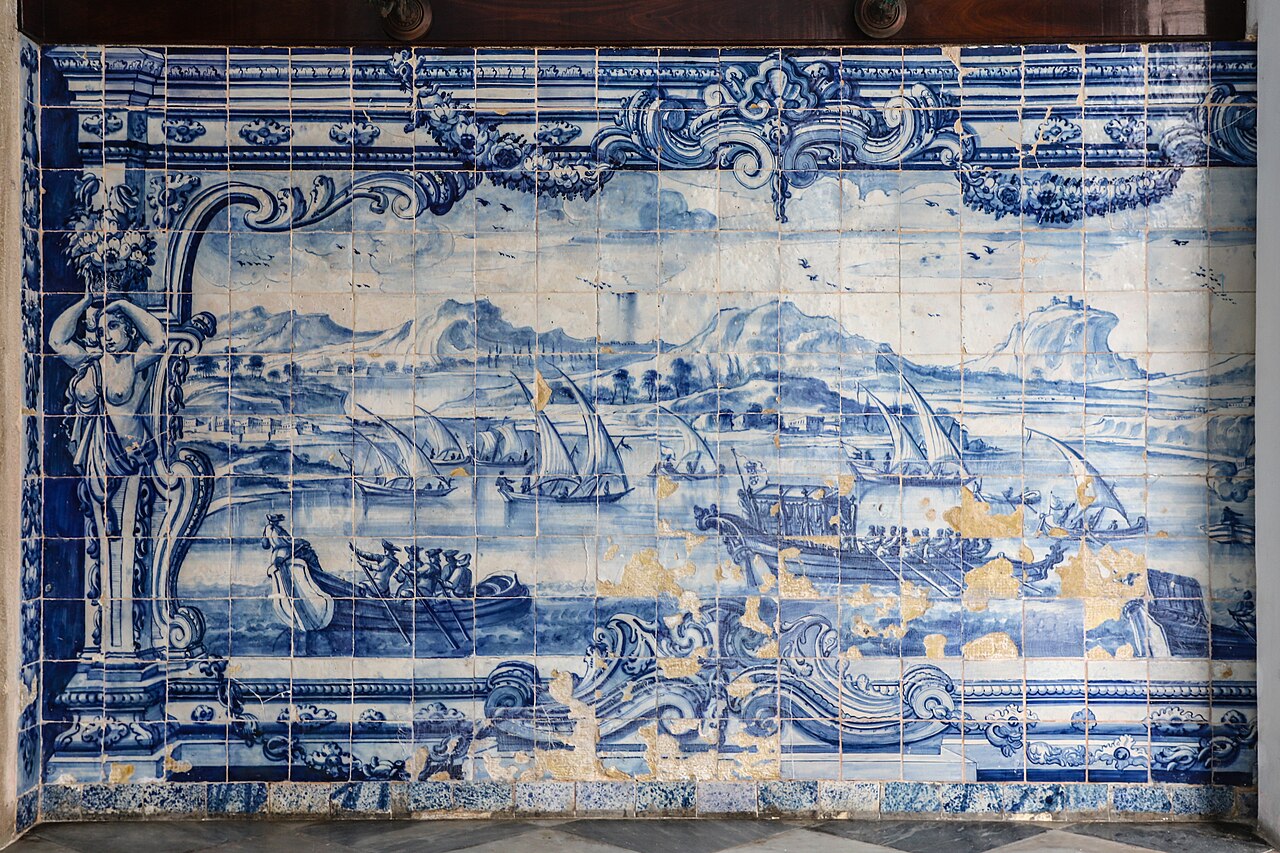
Photo: Paul R. Burley, CC BY-SA 4.0

The Dutch Tegeltableau
While Portugal covered its public buildings in vast tile compositions, the Netherlands developed a parallel tradition on a more intimate scale. The Dutch tegeltableau, literally a "tile picture", was a multi-tile panel designed for domestic interiors.
Tegeltableaux were commonly placed above fireplaces, in kitchens, hallways, and entrance passages. Where individual Delft tiles created a repeating rhythm across a wall, a tegeltableau provided a focal point, a framed scene set within the larger tile field.
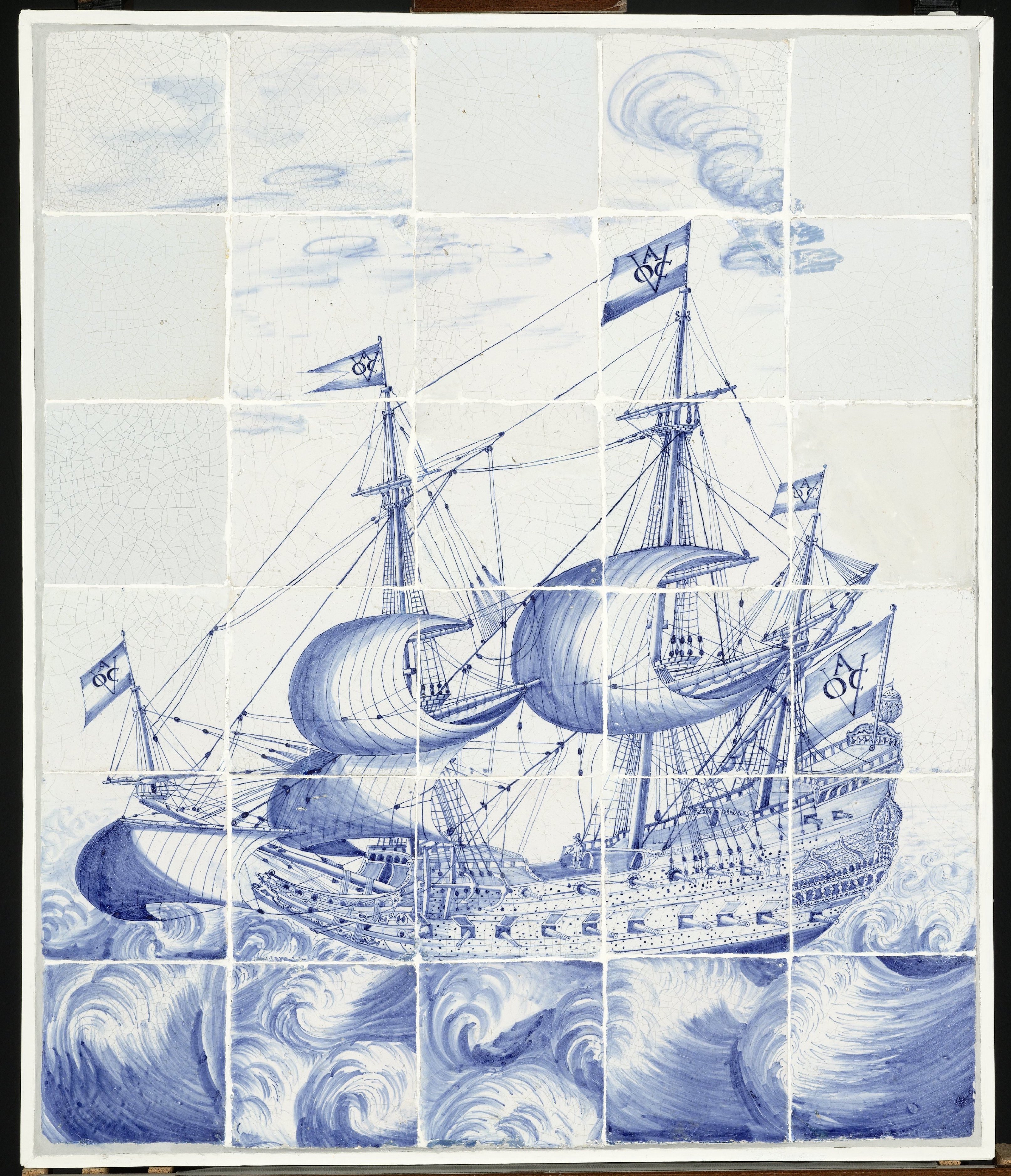
The subjects ranged widely: maritime scenes showing the ships of the VOC (Dutch East India Company), pastoral landscapes, biblical narratives, and elaborate flower arrangements. These panels were painted by specialist artists, often working within the major Delft potteries, who brought a painter's eye to the demands of the ceramic medium.
Cornelis Boumeester & the Maritime Tableau
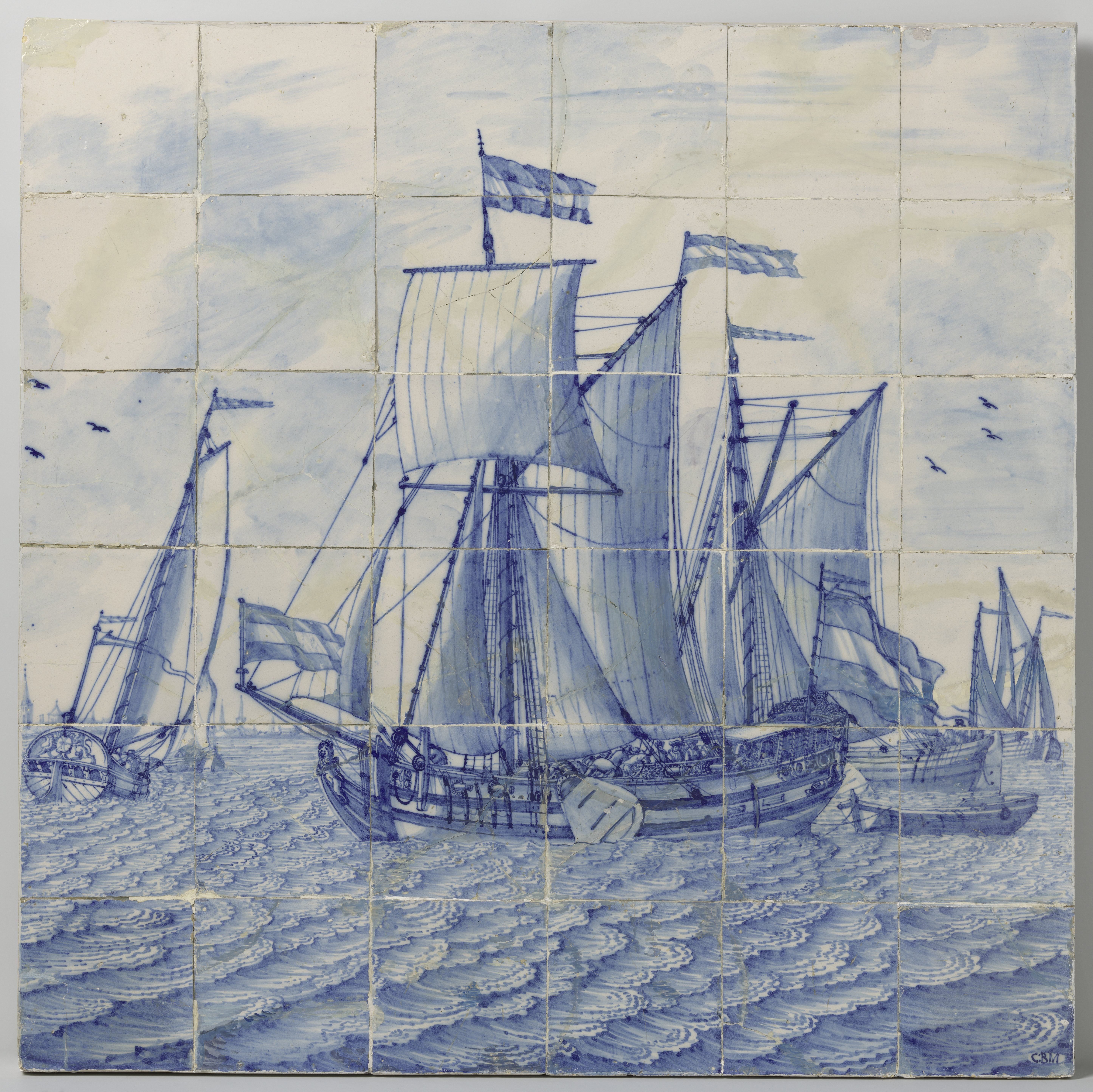
Among the masters of the tegeltableau, Cornelis Boumeester of Rotterdam (c. 1652–1733) stands apart. Boumeester specialised in maritime scenes of extraordinary ambition, painting warships, herring fleets, and harbour views across panels of dozens of tiles.
His seascapes capture the drama of the Dutch maritime world at its zenith: towering men-of-war firing broadsides, trading vessels riding heavy seas, and the busy commerce of harbours and estuaries. The panels could stretch to thirty or more tiles, creating panoramic compositions of remarkable detail and atmosphere.
Boumeester's fluid brushwork brought an almost painterly quality to the ceramic surface. His surviving panels, held in museums including the Rijksmuseum, the V&A, and the Lambert van Meerten Museum in Delft, remain among the finest achievements of the Dutch tile-making tradition.
Flower Vases & Domestic Life
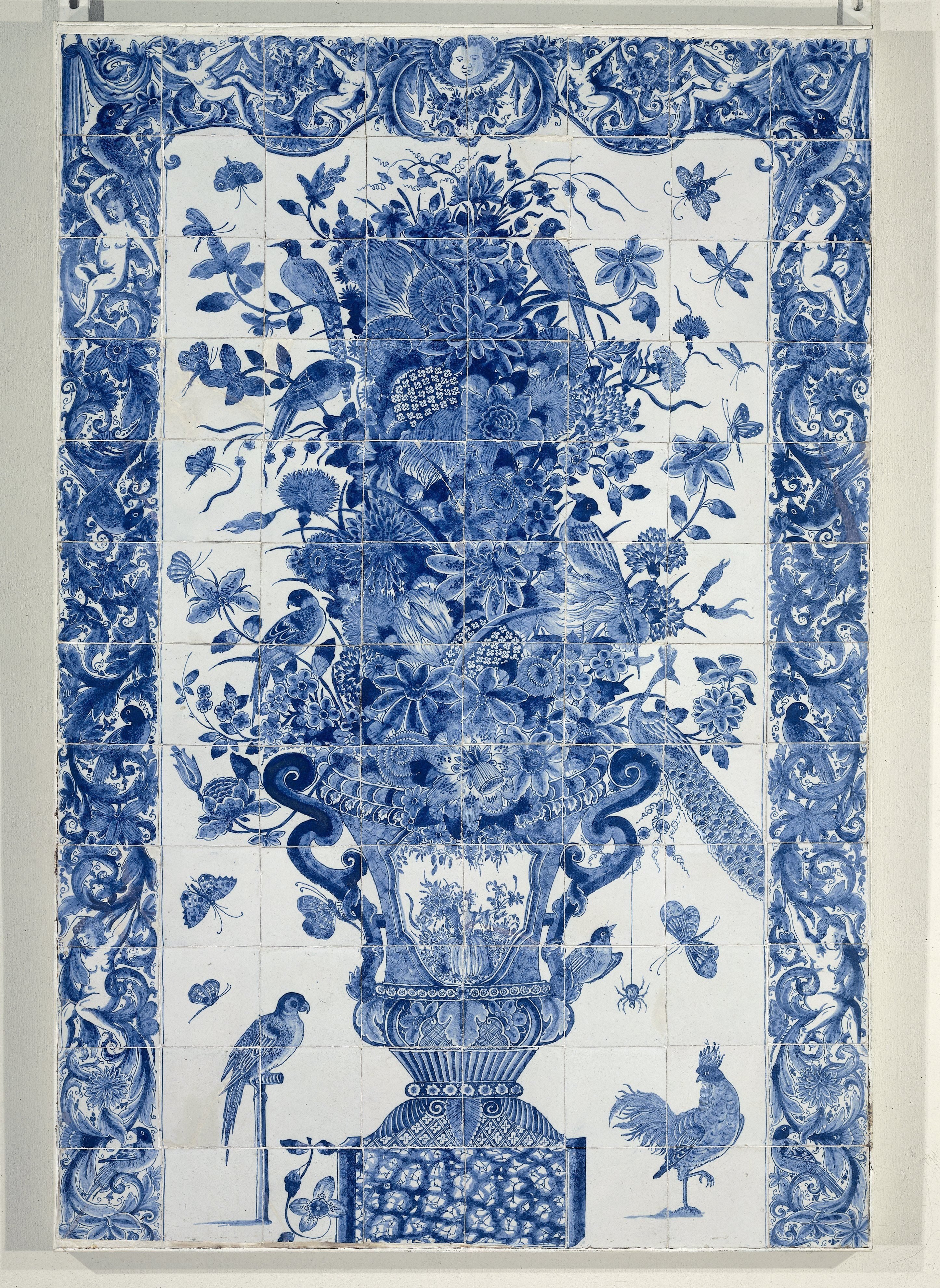
Not all tegeltableaux depicted the high drama of the seas. Many of the most charming panels portrayed the quieter pleasures of domestic life, and none more so than the flower vase panels that became a staple of Dutch interiors.
These panels, typically six to twelve tiles in size, depicted elaborate arrangements of flowers in ornamental vases, often framed by painted columns or arched borders. They drew on the same passion for botanical subjects that drove the Dutch flower painting tradition: tulips, roses, carnations, and exotic blooms tumbling in exuberant profusion.
Other domestic tegeltableaux depicted birds, chinoiserie landscapes inspired by imported Chinese porcelain, and pastoral scenes. Found in orphanages, almshouses, and merchant homes alike, these panels brought colour and refinement to everyday settings: a painted garden on a kitchen wall, a distant landscape above a hearth.
Now It's Your Turn
The traditions of the azulejo and the tegeltableau remind us that tiles have always aspired to be more than decoration. At their best, they are storytelling, scenes composed across many tiles that transform a wall into a window onto another world.
Not Quite Past's tile panels carry this tradition forward. Using carefully trained AI, you can create your own multi-tile compositions (seascapes, landscapes, botanical studies, or scenes drawn from your imagination) and have them printed on real ceramic tiles.
Explore our panels and create your own chapter in a story that stretches back five hundred years.